Yellow maize leaves in Kenya:Diagnosing soil deficiency vs disease
Yellow maize leaves are the most common distress signal from Kenyan farms, with at least eight distinct causes requiring completely different treatments. Applying CAN to yellow maize caused by aluminium toxicity wastes money. Applying lime to nitrogen deficiency misses the problem. This guide provides the precise diagnostic criteria for each cause.
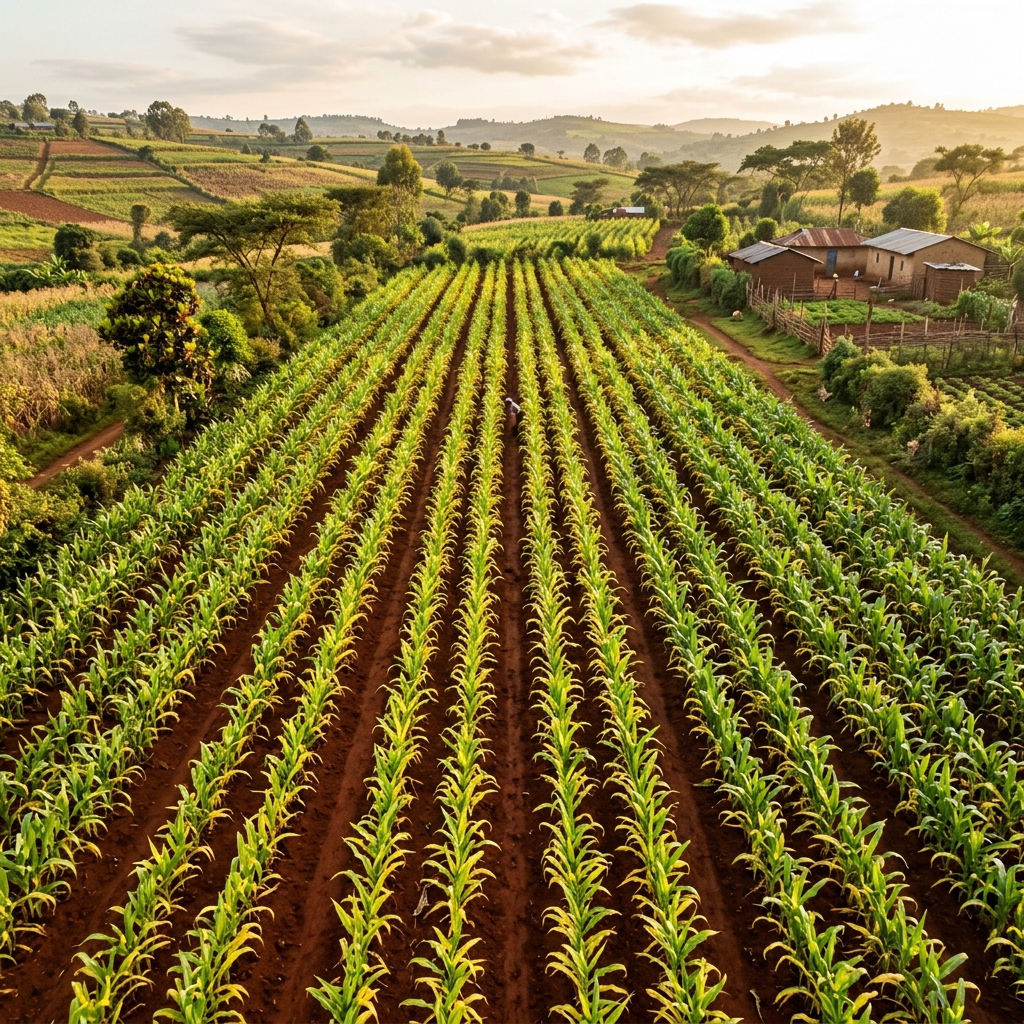
Yellow maize leaves are the most common distress signal from Kenyan farms, with at least eight distinct causes requiring completely different treatments. Applying CAN to yellow maize caused by aluminium toxicity wastes money. Applying lime to nitrogen deficiency misses the problem. This guide provides the precise diagnostic criteria for each cause.
Visual diagnosis guide: 8 causes of yellow maize leaves
| Cause | Pattern | Leaves affected | Other signs | Fix | Response time |
|---|---|---|---|---|---|
| Nitrogen deficiency | V-shaped from tip to midrib | Lower/older first | Pale green overall | CAN 50 kg/acre | 5–7 days |
| Aluminium toxicity | Uniform pale wash | All leaves | Stubby brown roots | Lime — next season | Next season |
| Phosphorus deficiency | Purple-red tint | Lower leaves | Cold soil, slow growth | DAP at planting | 2–3 weeks |
| Zinc deficiency | Interveinal stripes | Young/upper leaves | Common pH > 7.5 | ZnSO4 foliar 2g/L | 7–10 days |
| Sulfur deficiency | Uniform pale yellow | Youngest leaves | No response to CAN | AmSulfate foliar | 7–10 days |
| Grey leaf spot | Rectangular grey lesions | Lower first | Lesions between veins | Propiconazole spray | Stops spread |
| Corn leaf blight | Cigar-shaped tan lesions | Upper canopy | Cool humid conditions | Mancozeb spray | Stops spread |
| Maize streak virus | Bright yellow streaks | All leaves | Parallel to veins | Remove plants — no cure | N/A |
Nitrogen deficiency vs aluminium toxicity \u2014 the critical distinction
These two causes look similar from a distance but require opposite treatments. Getting the diagnosis wrong costs an entire season.
Nitrogen deficiency
Aluminium toxicity (low pH)
Free Precision Tool
Check if your county's soil has the deficiency causing yellow leaves — get a fix plan.
Get your farm-specific soil data and recommendations. Free. No sign-up required.
Open ShambaIQ