Bean farming in Kenya: The Ultimate yield guide
Maximize your beans harvest in Kenya with our expert guide on fertilizer application, soil pH, and KES production budgets for high-yielding beans farming.
Fertilizer Beans Kenya: The Ultimate Guide
Key Takeaways - Phosphorus is Key: Beans are nitrogen-fixing legumes, but they require high phosphorus at planting for strong root development and nodulation. - Soil pH Matters: Ensure your soil pH is between 6.0 and 7.0; acidic soils below 5.5 lock up phosphorus and require agricultural lime. - Precision Pays: Using balanced blends like NPK 10:26:10 or Sympal yields up to 40% more than using DAP alone.
Achieving high yields requires a precise strategy, and choosing the right fertilizer for your beans farmers use is the first step. Common beans (Phaseolus vulgaris) are highly sensitive to soil nutrient deficiencies, particularly phosphorus and zinc. Many smallholders in Kenya struggle with low yields of 3 to 5 bags per acre due to poor soil fertility and incorrect input applications.
By understanding your soil's specific needs and applying the correct nutrients, you can easily boost your yields to over 10 to 12 bags per acre. This guide provides a scientifically proven, field-tested approach to bean nutrition tailored specifically for Kenyan soils. To get started on your journey to better yields, you can create a free ShambaIQ farmer account today.
Choosing the Right Fertilizer Beans Kenya Farmers Trust
When selecting the best fertilizer beans Kenya soils require, you must consider the phosphorus levels. Phosphorus is critical for root growth and energy transfer within the plant. Beans can fix their own nitrogen from the air through symbiotic bacteria in their root nodules.
However, this biological process only happens efficiently if the plant has access to adequate phosphorus from day one. Using the wrong inputs can lead to vegetative overgrowth without actual pod formation. Applying the correct fertilizer beans Kenya recommendations suggest ensures that the plants nodulate effectively.
| Fertilizer Type | N-P-K Ratio | Best Application Stage | Key Benefits for Beans | Average Cost (50kg Bag) |
|---|---|---|---|---|
| DAP (Diammonium Phosphate) | 18:46:0 | Planting | High phosphorus content for rapid early root establishment. | KES 3,500 - 4,500 |
| Sympal (Legume Special) | 0:23:15 + Mg + S + Zn | Planting | Specifically formulated for legumes; sulfur and zinc boost nodulation. | KES 4,000 - 4,800 |
| YaraMila UNIK 17 | 17:17:17 | Early Vegetative | Balanced nutrition for soils lacking both potassium and phosphorus. | KES 4,200 - 4,900 |
| CAN (Calcium Ammonium Nitrate) | 26:0:0 + Ca | Top-dressing (Only if needed) | Provides nitrogen and calcium to prevent blossom-end rot in acidic soils. | KES 3,000 - 3,800 |
If you are unsure which option fits your specific land, you can get a personalised fertilizer plan to optimize your inputs.
Optimal Rates for Fertilizer Beans Kenya Production
To maximize your harvest, applying the correct amount of fertilizer beans Kenya agronomists recommend is vital. Over-fertilizing with nitrogen causes excessive leaf growth and delays flowering, making the crop vulnerable to pests. Conversely, under-fertilizing results in stunted plants, pale leaves, and poor pod filling.
Using the right fertilizer beans Kenya guide helps prevent salt injury to the delicate seeds during planting. Always ensure that the fertilizer is mixed well with the soil before placing the seed. Let's look at a step-by-step application guide for popular bean varieties like Wairimu, Rosecoco (GLP 2), and Mwitemania.
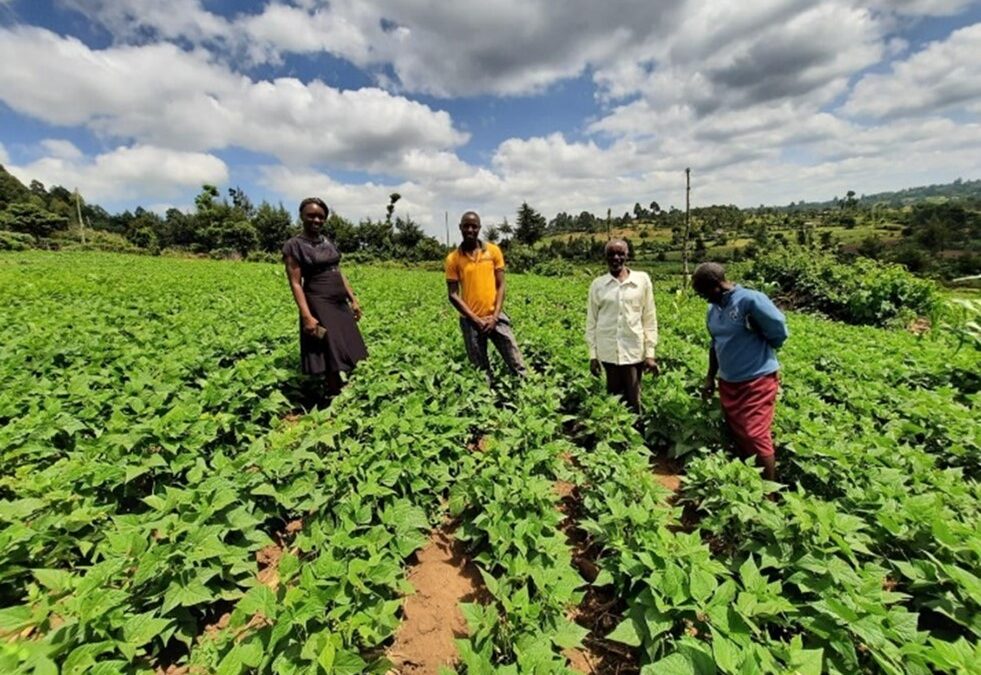
Step-by-Step bean Planting and Fertilizer Application Guide
- Soil Testing: Before buying inputs, check your regional soil profile. For instance, read the Kiambu County soil health report or the Nyeri County soil health report to understand local acidity levels.
- Land Preparation: Plough and harrow your land to a fine tilth. Ensure the field has good drainage, as beans do not tolerate waterlogging.
- Rhizobium Inoculation: Mix your certified seeds with a reliable Rhizobium inoculant (like Biofix) before planting. This step increases the natural nitrogen-fixing capacity of the bean roots.
- Applying Basal Fertilizer: Apply Sympal or DAP at a rate of 50 kg per acre. Place the fertilizer in the planting furrows or holes at a depth of 8–10 cm. This makes fertilizer beans Kenya application highly efficient and cost-effective.
- Seed Placement: Cover the fertilizer with a 2 cm layer of soil. Place the bean seeds (two per hill) at a depth of 4–5 cm to avoid direct contact with the fertilizer.
- Weeding and Top-dressing: Conduct the first weeding 2 to 3 weeks after emergence. If your soil test showed severe nitrogen deficiency, apply a light top-dressing of CAN at 25 kg per acre, or use a foliar feed high in micronutrients.
- Foliar Application: Spray a boron and zinc-rich foliar feed during the pre-flowering stage. This encourages uniform flowering and prevents pod abortion.
For personalized advice on managing pests like bean fly and aphids during this cycle, you can ask Shamba Mshauri, our AI agronomist for instant support.
Production Budget and Economics for One Acre of Beans
Farming should always be treated as a business. To help you plan your investment, we have compiled a realistic production budget for one acre of beans in Kenya. This budget assumes the use of certified seeds, recommended fertilizer rates, and standard labor costs.
| Activity / Input | Details | Cost (KES) | Expected Output / Revenue |
|---|---|---|---|
| Land Preparation | Ploughing and harrowing (tractor hire) | KES 5,000 | |
| Certified Seeds | 25 kg of Rosecoco or Wairimu seeds | KES 4,500 | |
| Basal Fertilizer | 1 Bag (50kg) of Sympal or DAP | KES 4,500 | |
| Foliar & Pesticides | Insecticides and flower boosters | KES 3,000 | |
| Labor | Planting, weeding, and harvesting | KES 12,000 | |
| Threshing & Packaging | Bags and manual threshing labor | KES 3,000 | |
| Total Cost | Estimated Total Investment | KES 32,000 | |
| Expected Yield (Low) | 6 Bags (90kg each) sold at KES 9,000/bag | KES 54,000 (Net Profit: KES 22,000) | |
| Expected Yield (High) | 12 Bags (90kg each) sold at KES 9,000/bag | KES 108,000 (Net Profit: KES 76,000) |
As shown above, investing in high-quality inputs and proper management practices can more than double your net profit per acre. If you are an input provider looking to supply these essential fertilizers to farmers, you can register as an input dealer or agrovet on our platform.
Frequently Asked Questions
What is the best fertilizer beans Kenya growers should use at planting?+
Can I use CAN fertilizer on my bean crop?+
Why are my bean leaves turning yellow despite applying fertilizer?+
Get your free ShambaIQ farm plan
Get a free soil-matched fertilizer plan, a dated season calendar, and reminders — for your exact farm.
Free forever · 47 counties · English & Kiswahili
Continue reading
Intercropping maize and beans in Kenya: Ultimate guide
A complete, practical guide on intercropping maize and beans in Kenya. Learn the best spacing, certified seed choices, and fertilizer application methods to double your harvest.
6 min read →GuideSeed selection in Kenya: A guide for higher yields
Discover how to choose the best certified seeds in Kenya. Compare varieties, estimate costs, and match seeds to your climate to maximize yields.
6 min read →GuideSoil erosion control in Kenya on hillside farms
Protect your hillside shamba from devastating topsoil loss. Discover practical, affordable physical and biological soil erosion control methods designed for Kenyan smallholders.
6 min read →Get personalized soil advice
Free precision fertilizer recommendations for your county and crop.
Get Free Advice →